About this game
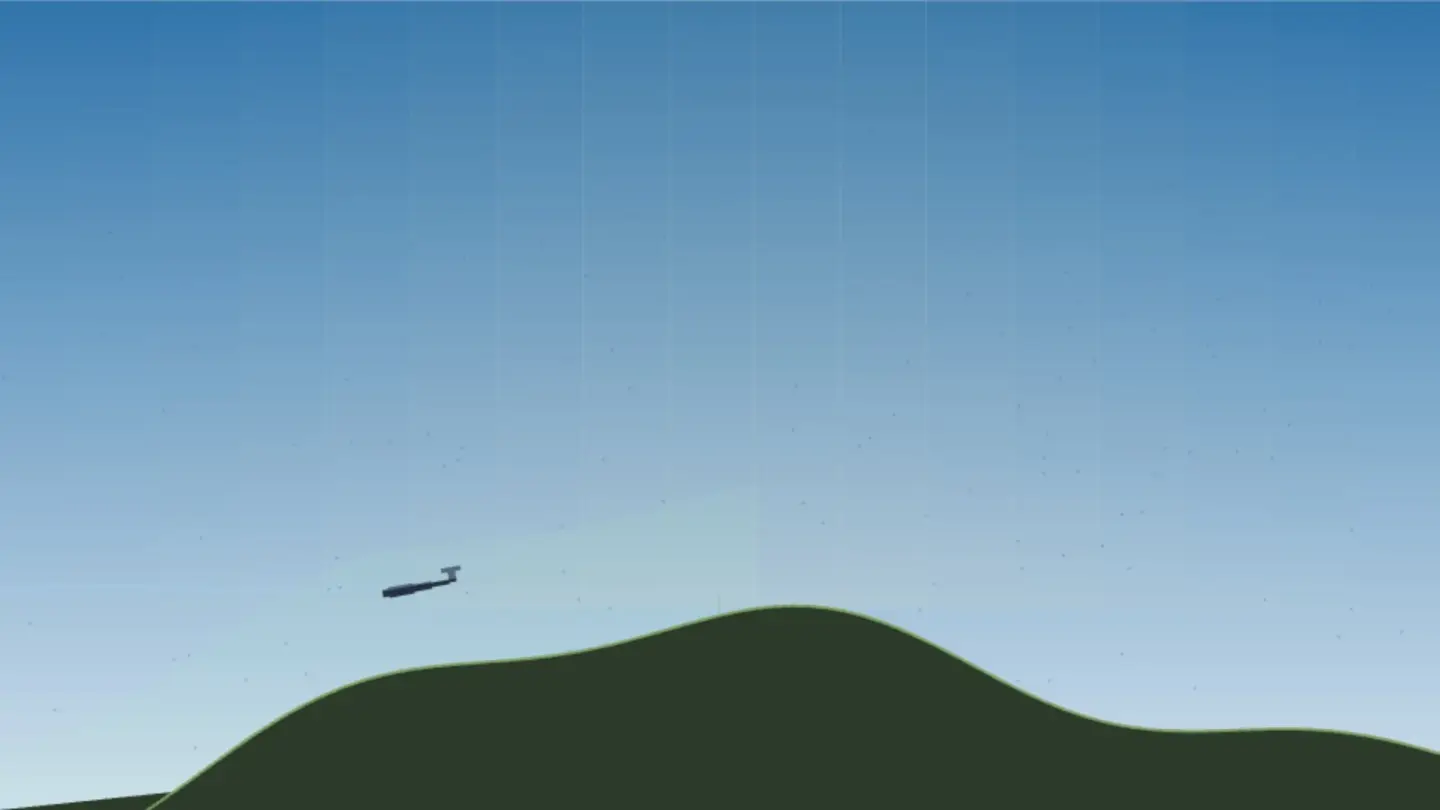
Skimloft is a plane with no engine. There is no throttle, and there is no button that makes you go faster for free. That one missing thing is the whole game.
You start high. From then on, every metre you fly forward costs you a little height, so the ground is always slowly coming up to meet you. The only way to get height back is to find air that is going up faster than you are coming down.
The air really does go up
This is not made up. On a sunny day the ground warms unevenly, and the warm air rises in places. Real pilots fly for hundreds of kilometres on it without an engine. Two kinds of rising air are in the game, and both are the real thing:
- Wide bands under the clouds. On a good day the rising air lines up into long streets with a little flat-bottomed cloud sitting on top of each one. The cloud is the sign. You can see it before you get there, which means you can plan.
- The windy side of a hill. Wind hitting a slope has nowhere to go but up. Fly low along the rising side and it will hold you there. It is the move to remember when you are too low for anything else — and it means being low is a problem to solve, not the end.
The other side of that hill is the one place in the game that can hurt you. Air that goes up the front has to come down the back, and it comes down fast and rough. It only happens close to the slope, so you are safe if you have height. The game paints it red, along the ground, the same way it paints the good side green. Stay out of the red.
You do not have to guess where any of it is. Specks of dust drift with the air. Where they float upwards, the air is going up. Where they hang and fall, it is going down. The thing you are hunting is drawn on the screen the whole time.
Four kinds of day
Weather is not the same every day, and neither is this. Every sky you fly is one of four real flying days. The name is at the top of the screen when you start, and it tells you what kind of flight you are about to have.
- Cloud streets. The good day. Wide bands of rising air with a little cloud sitting on top of each one, so you can see the plan from a long way off. Fly at the clouds.
- Blue day. The air still goes up, but it never gets high enough to make a cloud, so there is nothing up there to aim at. This is the day where you have to watch the specks. It is the same thing real pilots find hard about a blue day.
- Ridge day. Big hills and a lot of wind. The rising air over the hills is the whole plan, and it only works close to the slope, so this is the day you fly low on purpose.
- Late afternoon. The day is ending while you are flying it. The air is strong at the start and gets weaker the further you go, until there is nothing left but the hills. Go early and do not waste it.
There is one sky for today that everybody gets, and it is a different one of the four each day, so it is never the same two days running. Press N any time you want a fresh one.
How far is a good flight?
When you land, the game tells you. It draws a little bar with two marks on it. One mark is how far a pilot gets on this day if they ignore the sky and just glide. The other is how far a pilot gets if they read the air properly. Your flight goes on the bar between them.
Those two numbers are different for each kind of day, because the days are not equally kind. A good flight on a ridge day is shorter than a good flight under cloud streets, and it is not a worse flight. So you are never compared with somebody else, and never with a different day.
It remembers your best
The game keeps your best flight for each kind of day, and how many days in a row you have flown. It is all kept in this browser on this device. There is no account, no sign-up, and nothing is sent anywhere.
Beat your own best and the picture you get says so, with a dashed line showing where you got to last time. A short flight never takes anything away, and neither does missing a day. There is nothing here to lose.
How to play
You do not have to read this bit first. The game explains itself while you fly: one short line at a time, and only when the thing it is talking about is actually happening — when you are in rising air, when you are low over a hill, when the air below you is worth a pair of flaps. It stops for good once you have got it. If you want it back, press H.
- Hold the top of the screen to lift the nose. You slow down and you sink more slowly. This is what you do inside rising air.
- Let go, or hold the bottom, to drop the nose. You speed up and lose height faster. This is what you do when the air is sinking and you want to be somewhere else.
- That is the whole control scheme. On a computer it is the ↑ and ↓ keys, or W and S, or the space bar.
The bar on the left is the important one. It shows what the air is doing, not what you are doing. You are always sinking a little — that is normal and it is not the question. The question is whether the air you are in is going up enough to be worth slowing down for.
You can hear it too. Rising air beeps, and the beeps get higher and faster the harder it is going up. Sinking air growls. Real pilots fly by that sound so they can keep their eyes on the sky instead of on a dial, and here it means you can watch the clouds ahead and still know what the air under you is doing. Turn it off with M if you would rather it was quiet.
Three things you can do once
There are three buttons at the bottom of the screen. Each one works once per flight, and each one gives you something and takes something away. There is nothing to buy, nothing to unlock, and no advert to watch. Choosing when to use them is the second thing to learn after reading the air.
- Water — real gliders carry water in the wings to make them heavier, and pilots tip it out when they need to. Tip yours out and you get lighter, so you sink more slowly and climb better. But you also fly slower for the rest of the flight, so getting across a bad patch takes longer. Once it is gone it is gone.
- Flaps — the wing changes shape for 45 seconds. This is the best climb in the game, so save it for the strongest rising air you find. Do not use it and then race off: with the flaps down you go noticeably slower.
- Boards — flat panels come up out of the wing for 20 seconds. You come down much more steeply without speeding up, which is the one thing you cannot do any other way. Use it when the place you want to be is below you and you would otherwise sail over the top of it. It costs you height, so it is not a way to go further.
Controls
| Input | What it does |
|---|---|
| Hold top of screen | lift the nose — slow down and climb |
| Hold bottom | drop the nose — swap height for speed |
| ↑ / W / Space | lift the nose |
| ↓ / S | drop the nose |
| 1 | tip out the water — lighter, so you climb better, for the rest of the flight |
| 2 | flaps down for 45 seconds — your best climb |
| 3 | boards out for 20 seconds — come down without speeding up |
| M | sound on or off |
| H | show me how to fly again |
| R | same sky again |
| N | a fresh sky |
| D | today's sky |
| Fullscreen | hides the browser so the game has the whole screen. Press it again to bring the browser back |
Tips
- Watch the dust, not the ground. Where the specks drift upwards, the air is going up. That is the only thing on the screen that tells you where to go next.
- Slow down in the good air, hurry through the bad. This is the whole skill and it is the opposite of what feels right. Going slowly in sinking air is the worst thing you can do, because it keeps you in the sinking air for longer.
- Fly at the cloud. The little flat-bottomed clouds sit on top of the rising bands. They are visible long before the lift is, so you can aim at one from a long way off. On a blue day there are none, and the specks are all you have.
- Being low is not losing. Get near a hill with the wind blowing up its face and you can climb back out. Some of the best saves happen from very low down.
- Pull up gently. A smooth pull turns speed into height. A sudden one out of a fast dive stalls the wing and wastes both.
- Save your flaps for the best air you find. A weak band with the flaps down is a waste of the one really good climb you get.
The one way to get it wrong
Holding the nose up is always safe. You will never fall out of the sky for doing the obvious thing. That was a deliberate decision: a game that punishes you for the first thing you try is a bad game.
You can still stall, though, and it is worth knowing how. If you dive hard to build up a lot of speed and then yank the nose up all at once, the wing stops working for a moment and you drop. It is always your own doing, and you can feel it coming. Pull up more gently and it will not happen.
Good to know
- Nothing to buy and nothing to unlock. No sign-up, no chat, and no way for players to contact each other.
- There is no finish line. The score is how far you got and how high you reached, and a flight ends when you touch the ground. Then you go again.
- Every sky has a number. There is one for today that everybody gets, and endless fresh ones whenever you want. Send someone the number and they fly exactly the same air you did — the same kind of day, the same hills, the same clouds in the same places.
- You get a picture of your flight. When you land, the game draws the whole thing: every climb in orange, every glide in blue, over the hills you crossed, with your distance on it. Save it or send it, and the link beside it puts a friend in the same air.
- It plays just as well with a finger as with a keyboard. It was built for a thumb first — the top half of the screen is up and the bottom half is down, so there is no joystick to find.
- Going slower is not always better. Going slowly in sinking air is the worst thing you can do, because you spend longer in it. Learning when to hurry is most of the skill.
Curious about the real thing? We wrote about how high planes fly and why they go up there, what the parts of an airplane are and what each one does, what angle of attack means and why pulling up too hard stops a wing working, and what a g force is. If you just want more to fly, here are the best plane games you can play at school.