About this game
Swivelhead puts you on the footpath and asks one question: can you get to the other side. You turn your head to look, and that's the whole idea. Stop at the kerb, look right, look left, look right again, then walk stops being something you're told and becomes something you actually do.
On a phone you turn your head by swiping the screen, and three buttons walk, run and step back. On a computer you turn it with the mouse and walk with the keys. It's the same game either way: half a swipe turns your head as far as you'd really turn it to look down a road.
A quick flick doesn't count as looking. You have to turn your head properly and hold it long enough to see something. A look also goes stale after a few seconds, because a road you checked ten seconds ago is a road that has changed.
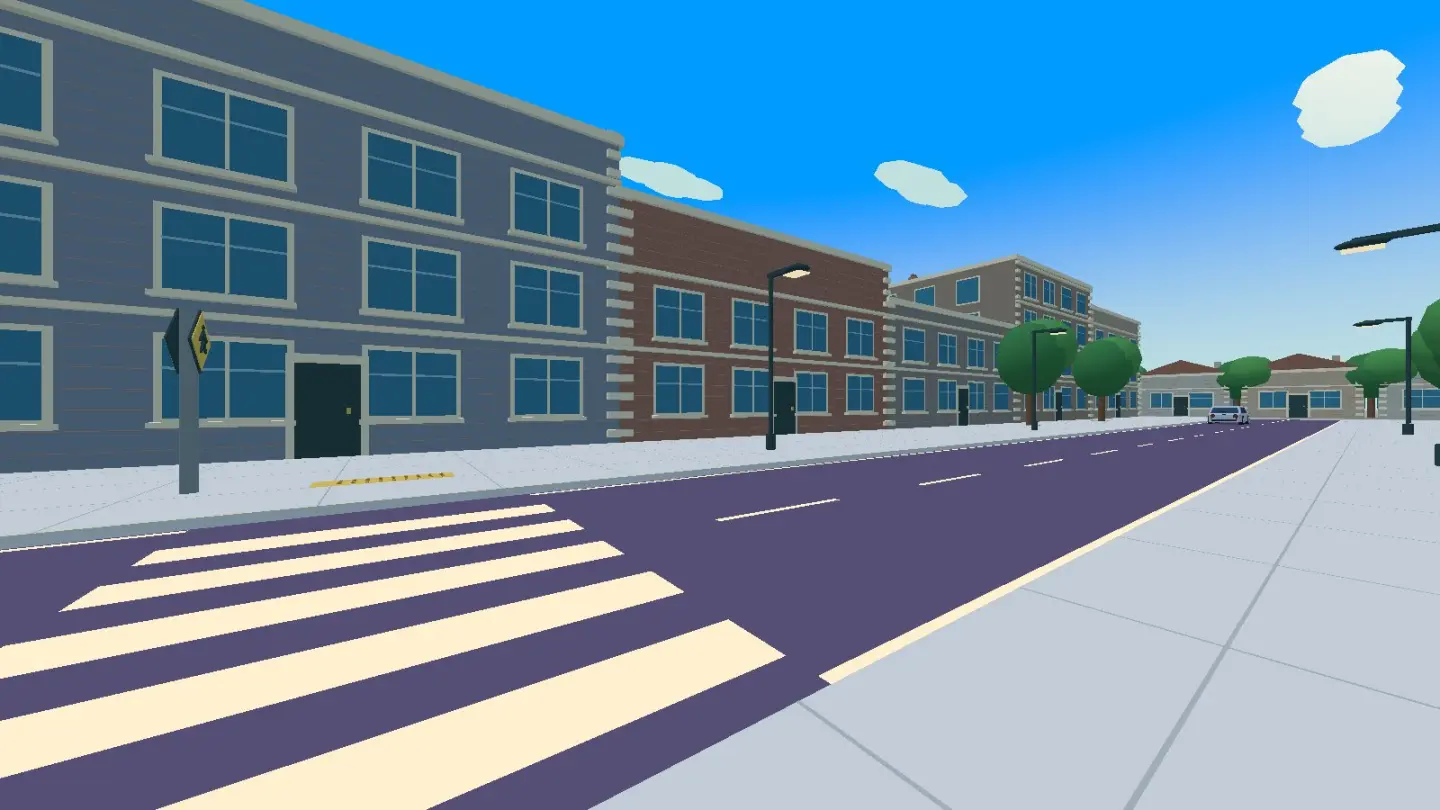
The traffic is really being driven, not just moved along. Cars keep their distance, take a real distance to stop, and take noticeably longer in the wet. What blocks your view really blocks it, so a car hidden behind a parked van is genuinely hidden — and afterwards the game will tell you that the gap you took was one you couldn't see the end of. At a zebra crossing most drivers stop for you and some don't, which is the most important thing here: a crossing tells drivers to give way, it doesn't make them.
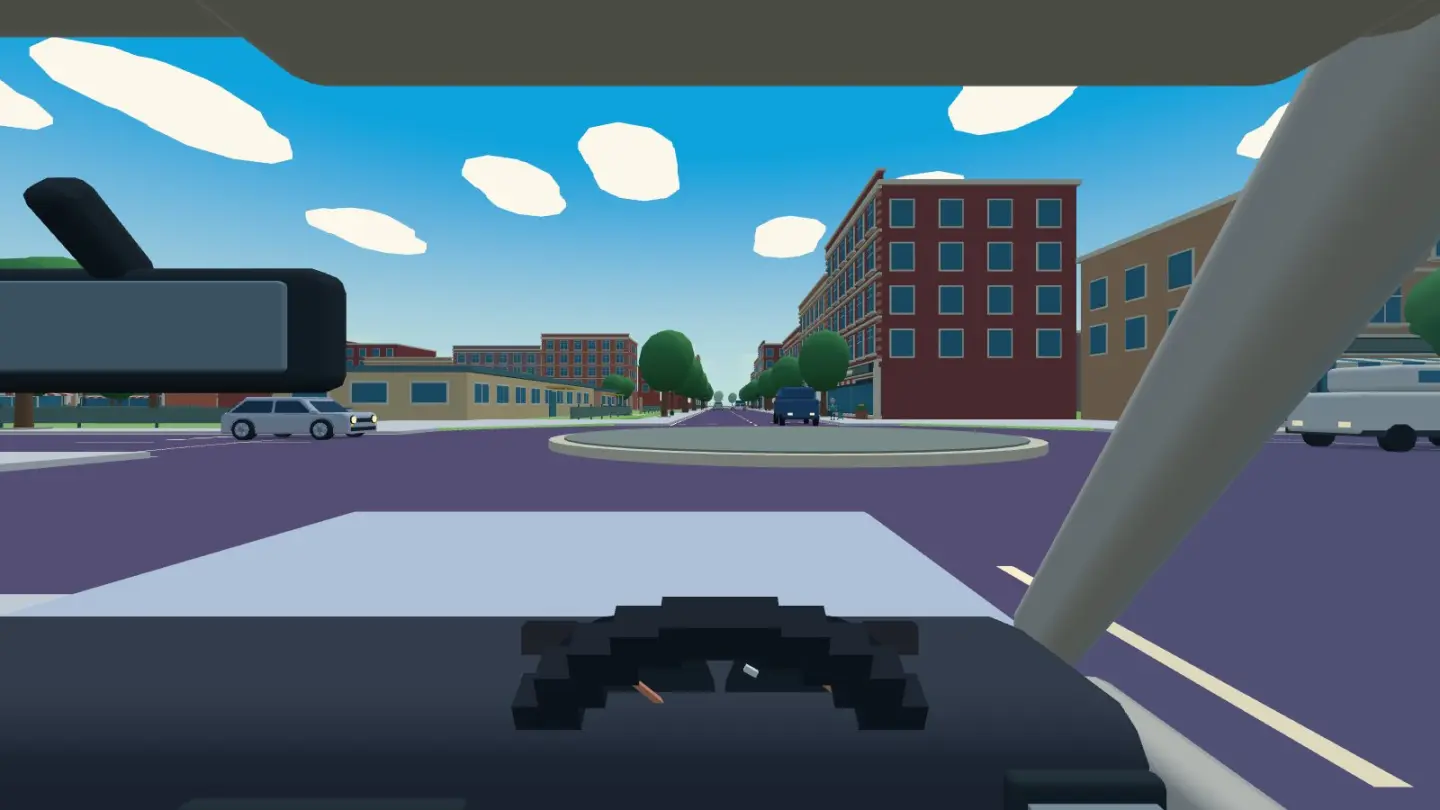
There are six levels. Three streets — an open road, a row of parked cars, a zebra crossing — and then three junctions, each in a different country, because the rules change under you. A roundabout, where you cross one arm rather than the circle. A British pelican crossing, where the flashing green man means the opposite of what it looks like. And an American junction where a car can legally turn across your crossing on a red light while the driver is looking the other way. Australia, Britain and America don't agree on which way you look first, and the roads flip round with them.
Then there are three real cities. In Tokyo every car stops at once and everyone crosses together, even corner to corner. In London there are zebra crossings with flashing beacons and no lights. In New York you cross a wide one-way avenue on the signal. Each city has its own country's rules. Cars keep left in Tokyo and London, and keep right in New York.
How to play
- Walk to the kerb and stop. Hold the Walk button, or use WASD. Walking is normal speed. The Run button and Shift both run, and running counts against you. The kerb is where the game starts paying attention.
- Do the whole check. Turn your head right, then left, then right again, holding each one long enough to see. The screen shows each check going in. A glance that doesn't show up didn't happen — a flick isn't a look, whether you swipe it or move the mouse.
- Wait for a real gap. Not one you could run through. One that's still a gap while you walk across at normal speed, judged on the traffic you can actually see.
- Keep looking while you cross. Checking doesn't stop at the kerb, and you get marked on it. On a crossing, watch the car actually stop rather than trusting the stripes.
- Read your report. Every crossing is marked on four things: did you look, was the gap big enough, did you walk, and did you keep looking. A two-second gap you got away with is still marked as a two-second gap.
Controls
| Input | What it does |
|---|---|
| Swipe or mouse | turn your head — this is the whole game |
| WASD or the Walk button | walk (walking is the default) |
| Shift or the Run button | run — and it is marked against you |
| Esc or the pause button | pause |
| Fullscreen | hides the browser so the game has the whole screen. Press it again to bring the browser back |
Tips, and what you're really being marked on
- If you can't see, you can't cross. Parked cars hide the road, and they hide you too. Walk to a clear stretch, or edge out slowly until you can see all the way down.
- Look again just before you step. The most common mistake in the whole game is a perfect check followed by a four-second pause. Check again, then go.
- Stripes don't stop cars — drivers do. At a zebra crossing, wait until the car has actually stopped. A car slowing down is not a car that has stopped.
- Never cross the roundabout itself. Cross one arm, back from the circle, where the traffic is in one lane going one way.
- A flashing green man is not a green man. At a British pelican crossing: green means go, flashing means finish if you've started but never start now, and red means wait. It isn't long.
- WALK doesn't mean empty. At the American junction a car can legally turn across you on a red, and the driver is watching the traffic they're joining, not the crossing they're turning into.
Good to know
- No crash is ever shown. Get it wrong and there's a screech and a white flash before anything touches, then you're back on the kerb with a line about what to do differently. No collision, no injury, nothing to see.
- Swivelhead is free to play in your browser, with no sign-up, no chat and nothing to buy. It's used in classrooms as well as at home, which is why players can't contact each other.
- It plays on a phone, and there's one thing to know. You turn your head by swiping, so the check takes four swipes where a mouse does it in one movement. Everything else is the same, including the marks.
- Swivelhead is a game about road-crossing decisions. It's good practice, but it isn't a substitute for being taught on a real road with an adult.
- Your progress stays in this browser, and your report is yours to share or not.
Teaching this rather than practising it? The crossing the road game guide explains what it practises and how, and the Green Cross Code is the routine it's built on. For a quieter place seen through the same eyes, Fetchmead is a meadow where you catch birds with a net and a dog brings them back.